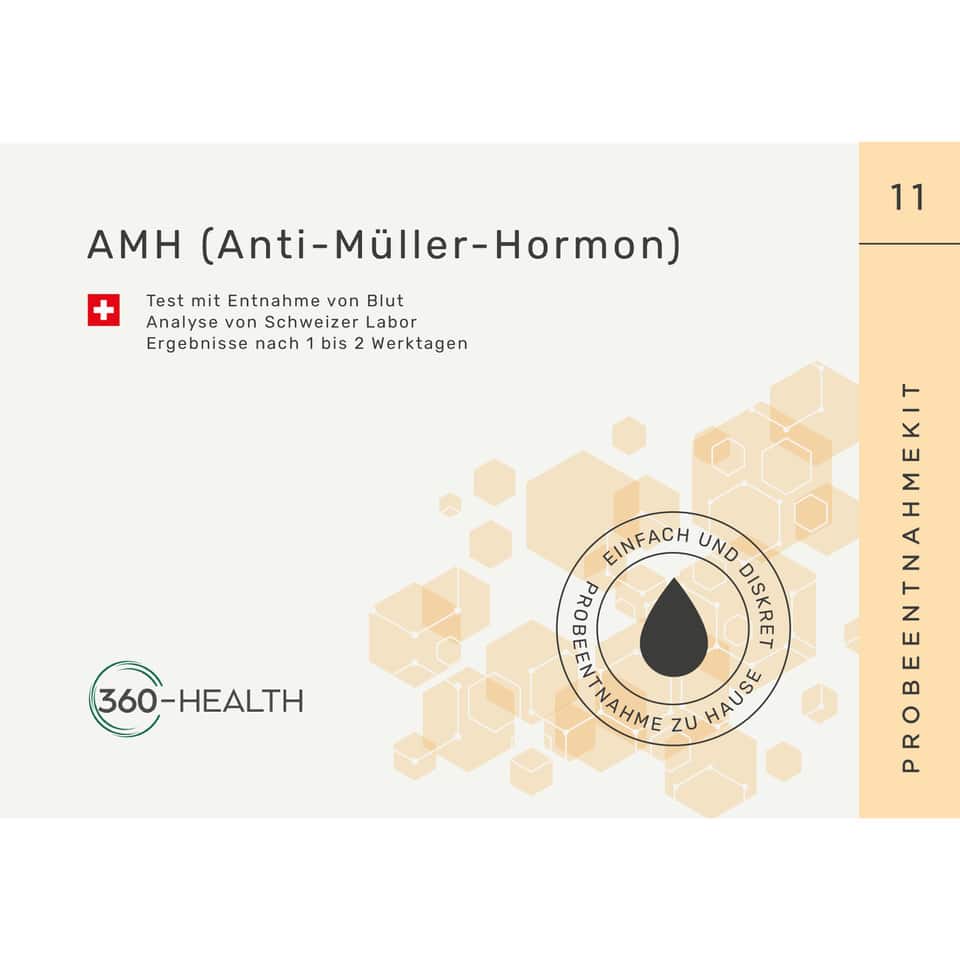
Anti-Müller Hormon AMH (Eizellreserve)
CHF 89.00 inklusive MWST
AMH (Anti-Müllerian Hormone)
The AMH test measures the level of Anti-Müllerian Hormone in the blood and provides insight into a woman’s ovarian reserve (egg supply). It is commonly used in fertility assessments to estimate the remaining number of eggs and to evaluate how the ovaries may respond to hormonal stimulation.
AMH levels are largely independent of the menstrual cycle, meaning the test can be performed at any time. Low levels may indicate a reduced ovarian reserve, while higher levels can be associated with conditions such as polycystic ovary syndrome (PCOS).
Painless blood collection with TAP II®
For this test, a small blood sample is collected using the TAP II microneedle device. This innovative device uses multiple microscopic needles to gently draw capillary blood from the upper arm (shoulder area), rather than from a fingertip or vein.
The application is quick and designed to be virtually painless—most people feel only a light pressure or minimal sensation. The device is placed on the skin, activated with a simple click, and automatically collects the required amount of blood within a few minutes. No visible needle is involved, and there is typically no need for squeezing or repeated attempts.
This method is particularly convenient for at-home testing, offering a comfortable and stress-free alternative to traditional blood draws. The sample will be analysed by a licensed Swiss laboratory. You will receive the result in 1-2 business days by secure E-mail.
Anti-Müllerian Hormone (AMH) test
The AMH test measures the level of Anti-Müllerian Hormone in the blood and provides insight into a woman’s ovarian reserve (egg supply). It is commonly used in fertility assessments to estimate the remaining number of eggs and to evaluate how the ovaries may respond to hormonal stimulation.
AMH levels are largely independent of the menstrual cycle, meaning the test can be performed at any time. Low levels may indicate a reduced ovarian reserve, while higher levels can be associated with conditions such as polycystic ovary syndrome (PCOS).
Suitable for women who want to assess their fertility, are planning a pregnancy, or require additional information as part of a gynecological evaluation.